Corporate Events
The 60-day corporate event checklist
Corporate events in Nigeria rarely fail on the day. They fail in week six, when a hotel hold quietly expires, the keynote speaker's visa is still 'in process', and nobody owns the run-of-show. Whether you are hosting a product launch in Victoria Island, an AGM in Abuja or a two-day conference in Port Harcourt, this is the 60-day sequence that keeps it on track.
Before day 60: decide what success looks like
Every good corporate event starts with one sentence: why are we doing this? 'Launch the new product to 300 trade partners and capture 150 qualified leads' is a brief. 'Do something nice for the end of the year' is not.
Write the objective down, agree one number that defines success, and name a single person who makes the final call. In many Nigerian organisations, the event is shaped by whoever spoke to the MD last. A clear owner and a written objective protect the planning team from constant changes.
Days 60–45: lock the things you cannot move
- Sign the venue contract. A verbal hold is not a booking, and busy halls in Lagos and Abuja release holds without warning when a paying client appears.
- Choose the location with your guests in mind. If most delegates are on the Mainland, a Lekki venue on a weekday evening means two hours in traffic for them. In Abuja, check the date against National Assembly sittings and major government events, which fill hotels and tighten security.
- Set the budget with a named approver for each line, and agree how payments will be processed — some vendors need a purchase order, others need a deposit before they hold the date.
- Send speaker invitations with the date, length of talk, format and honorarium stated clearly.
- If any speaker is coming from abroad, start their visa process now. Nigerian visas and international flights both need weeks, not days.
- Open registration, even if the agenda is still provisional. Early sign-ups tell you how big the room needs to be.
Days 45–30: production and content
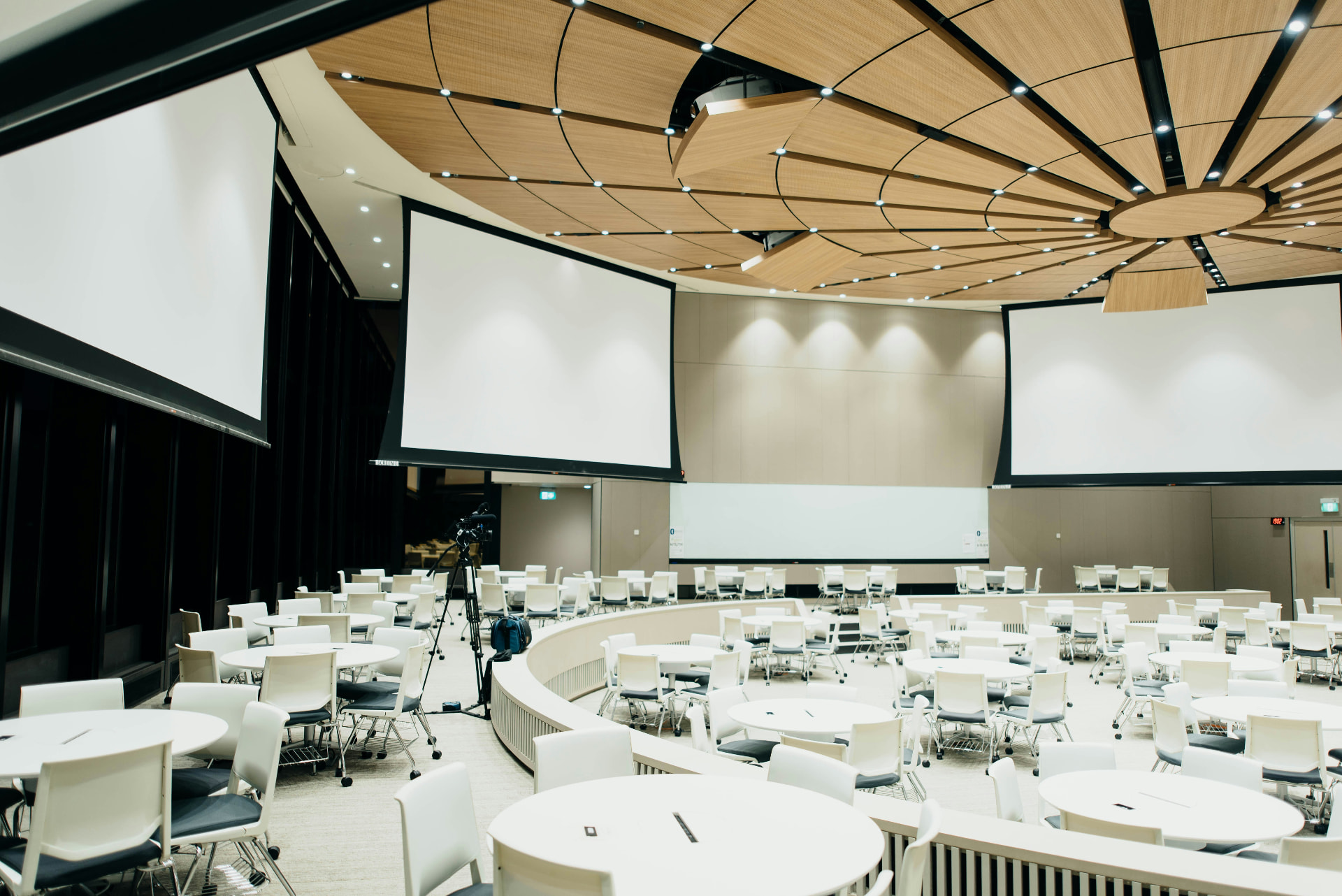
This is the window where the event becomes real. Walk the venue with your audio-visual lead instead of relying on a floor plan. Ceiling height, rigging points, power outlets, loading access and where the generator will sit decide half your production design.
Do not assume the venue's internet will cope. If you are livestreaming or relying on online registration at the door, plan a dedicated connection and a backup, such as a second network provider or a satellite link.
- Complete the AV plan: screens, sound system, stage lighting, microphones, recording and streaming.
- Draft the run-of-show to the minute, including walk-ins, transitions and buffer time.
- Confirm catering numbers in bands (for example 250–300) and how dietary needs, including halal meals, will be handled.
- Brief your brand team on banner sizes, backdrop dimensions and print deadlines. Printers in Lagos get busy around November and December.
- Book power redundancy: the venue generator plus a backup, and a technician on site all day.
- Agree the protocol for VIPs — commissioners, board members or traditional rulers often need a reserved entrance, a holding room and an escort.
Days 30–14: rehearse the risks
- Collect every speaker's slides. Enforce one 16:9 template and a firm submission date, and keep copies on two laptops and a USB drive.
- Run a technical rehearsal with the actual switcher, laptops and clickers — not just a quick sound check.
- Finalise name tags and accreditation, the security briefing and emergency exits.
- Confirm delegate transport, parking spaces and drivers. If guests are staying in a hotel, agree shuttle times that account for traffic.
- Send joining instructions: map link, dress code, start time, parking details and a phone number that someone will actually answer.
- Prepare a simple plan for heavy rain if any part of the event is outdoors. Between April and October, assume it will rain.
Days 14–1: the countdown
Freeze the run-of-show seven days before the event. After that, every change goes through one person and is written down, or your crew will end up working from three different versions on the day.
Send a final reminder to registered guests 48 hours before, and another on the morning of the event. Nigerian audiences respond well to a short, friendly WhatsApp or SMS reminder with the time and location.
- Print the crew call sheet with names, phone numbers and arrival times.
- Confirm the loading time, lift access and order of deliveries with the venue.
- Pack spares: laptop, clicker, batteries, lapel mics, HDMI cables, extension boxes and tape.
- Brief the MC on name pronunciation, protocol order and what to do if a speaker runs over.
- Agree payment of vendor balances before the day, so nobody holds back equipment over a delayed transfer.
Budget lines people forget
| Item | Why it matters | Typical 2026 range |
|---|---|---|
| Backup generator & diesel | Grid power cannot be relied on for a full programme | ₦300k – ₦900k per day |
| Dedicated internet | Venue Wi-Fi fails with 200+ users | ₦150k – ₦600k |
| Security & crowd control | Required for VIP guests and large crowds | ₦200k – ₦1m |
| Speaker travel & hotel | International speakers need flights, visas and transfers | Varies widely |
| Photography & highlight video | Content for social media and next year's sponsors | ₦400k – ₦2m |
| Contingency | Last-minute prints, extra meals, overtime | 8–10% of budget |
Day zero: running the event
- Crew should arrive three hours before doors open for a one-room event, and five hours for a multi-track conference.
- Give one person control of the clock and the authority to cut content. Nigerian programmes often run late because nobody is allowed to tell a senior speaker to wrap up.
- Start on time even if the hall is half full. Guests learn quickly whether 'Nigerian time' applies to your events.
- Capture attendance, session feedback and lead details before people leave — a QR code on every table works well.
- Keep one runner free at all times for emergencies: a missing name tag, a broken microphone or a VIP who needs help.
A well-run corporate event feels effortless to guests because the hard work happened six weeks earlier.
After the event
- Send a thank-you message to guests within 24 hours, with slides, photos or a short highlight video.
- Hold a debrief within 72 hours while memories are fresh, and write down what to keep, change and drop.
- Settle all vendor balances on time — reliable payers get the best vendors next year.
- Compare results against your original objective and share the numbers with leadership.
Key takeaways
- Write one clear objective and name one decision-maker before anything else.
- A signed venue contract is the first real milestone — everything else follows from it.
- Plan for traffic, rain, power and internet; in Nigeria, all four are part of the brief.
- Freeze the run-of-show a week out and route every change through one person.
- Start on time and debrief within 72 hours.